
From “Make Do” to “Make Good”: A Decade in Uniform
Style is part of the story.
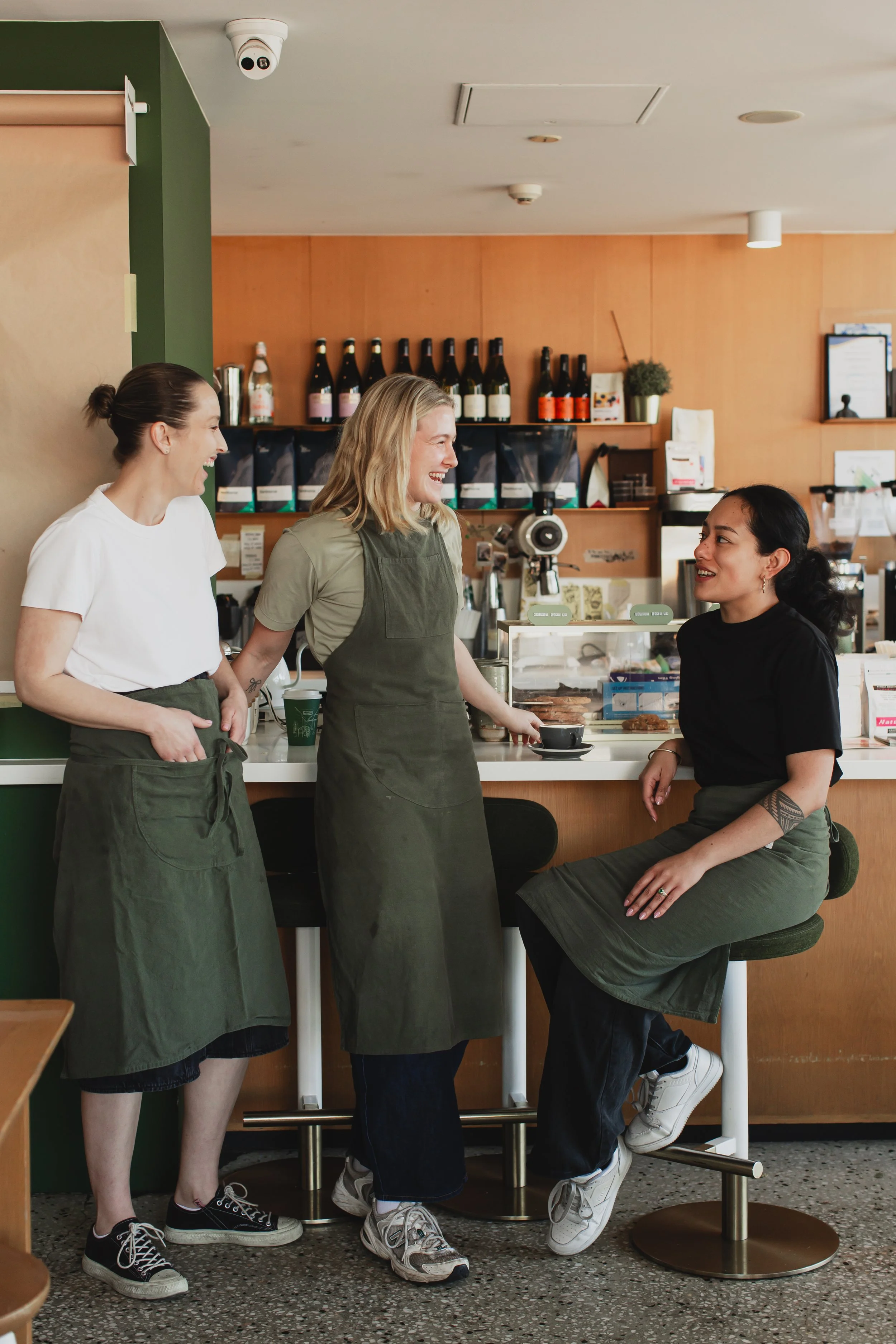
Once a practical necessity, uniforms have become a powerful tool for storytelling — communicating who a venue is before a single word is spoken.
That’s something Worktones does brilliantly. They’ve helped shape the look and feel of our most recent uniforms across Morning After, Yolk, and PingPong, proving that design can be as integral to a café’s identity as coffee or community. We caught up with co-founder Huw Bennett to chat about this evolution and what the next decade of hospitality style might bring.
On how uniforms have evolved
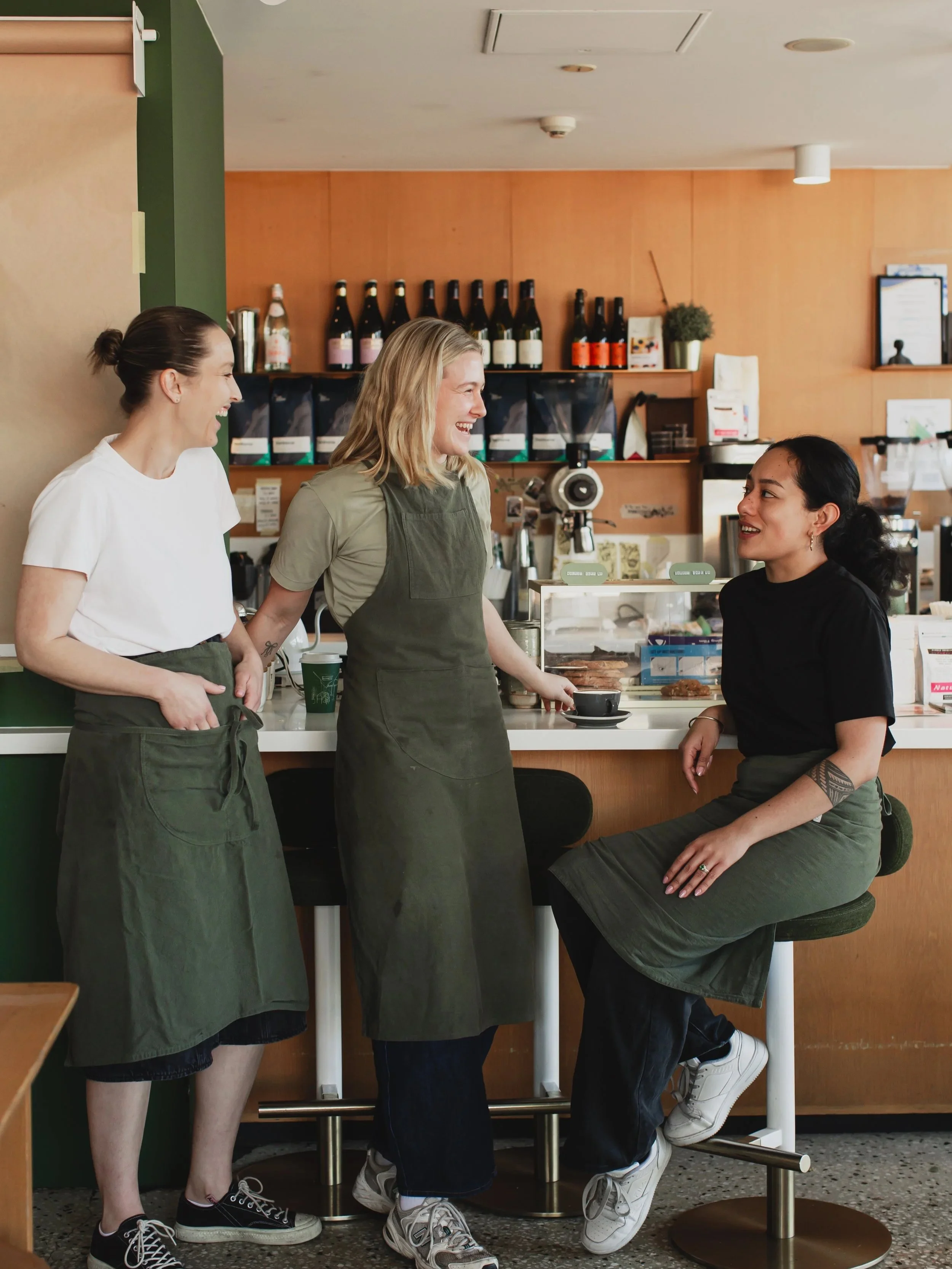
“There’s been a shift in attention on all fronts — detail, fabrics, colours. It’s gone from ‘make do’ to ‘make good.’”
Over the past decade, Huw says uniforms have become a crucial piece of the brand puzzle. “A uniform is often the first point of contact a customer has with a venue,” he explains. “The move toward greater attention has really been about cohesiveness, consistency, and clarity — for both the customer and the team.”
On trends (the good, the bad, and the polyester)
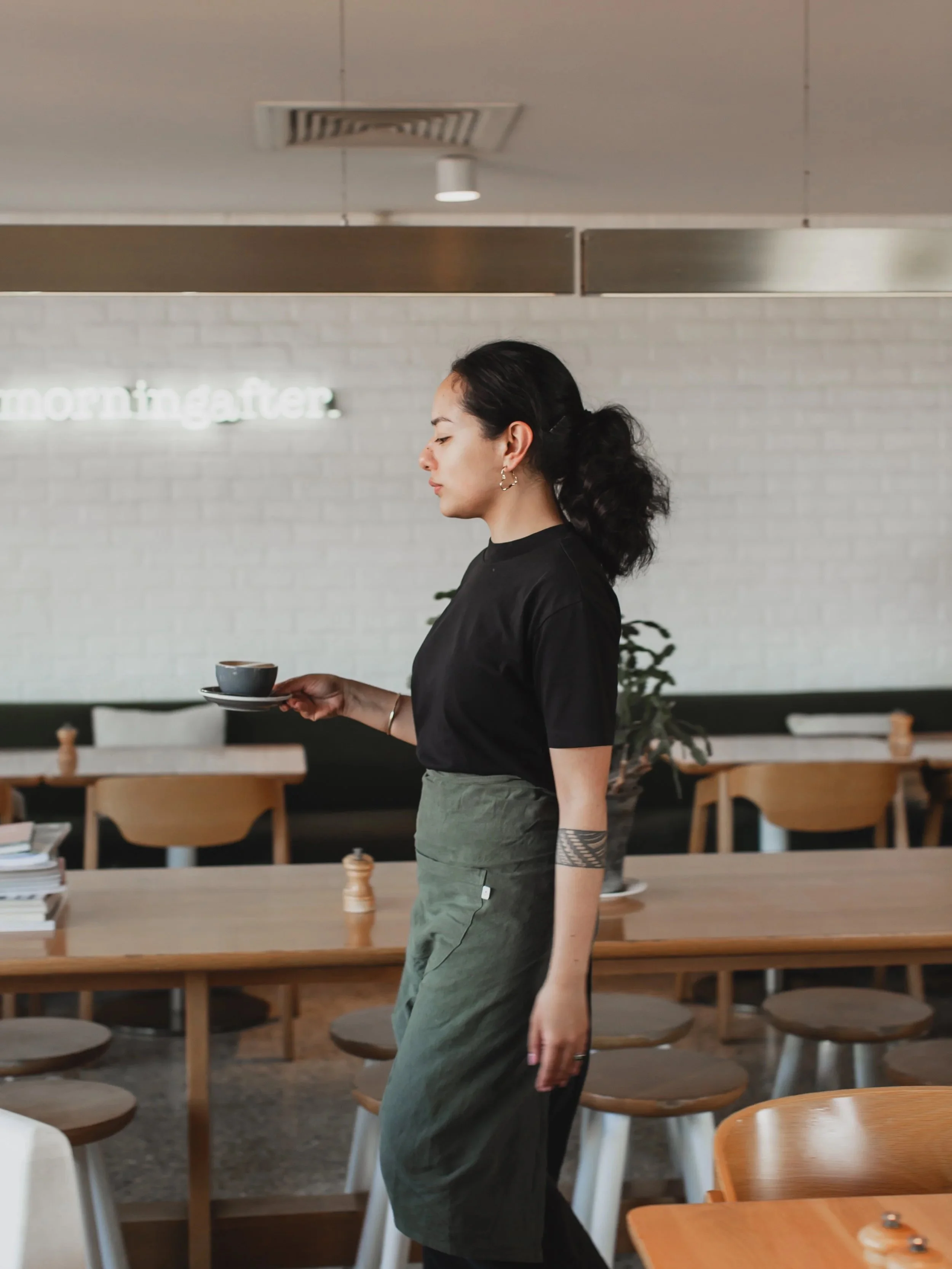
“The overreliance on polyester — whether in aprons or garments — has never sat right.”
From the beginning, Worktones has stood by natural fabrics like cotton, linen, and hemp. “They breathe, they’re hypoallergenic, and when cared for properly they require less maintenance,” says Huw. “Just as we prepare food and drink with care, we should approach what we wear in the same way.”
On why uniforms matter
Uniforms don’t define the staff or venue, but they do set the tone. “In hospitality, nothing stands still,” Huw says. “A uniform gives the team structure and confidence, provides customers with a sense of narrative and expectation, and gives the operator a foundation to showcase their vision.”
On the Australian hospitality ‘look’
“Relaxed. Thoughtful. Confident.”
“We work with venues at the peak of their game,” Huw explains, “but there’s always that relaxed Australian attitude — ‘she’ll be right.’ At the same time, there’s thoughtfulness in how venues represent themselves and confidence in backing their ideas.”

On Morning After’s role in shaping style
“Venues like Morning After have set strong benchmarks,” says Huw. “They’ve shown that cafés can be destinations, not just local pit stops.”
He believes Australia’s café culture has become its own design language — one that’s thoughtful, inclusive, and proudly home-grown.
On balancing form and function
“It’s always a balance,” Huw says. “We think of it as form vs function — like scales. To work, you need the right amount on both sides.”
On his dream uniform
“I’ve always loved travel-inspired uniforms — railroad staff, flight teams, tour operators,” he says. “They had to perform under tough conditions but projected charm and confidence. There’s a sense of nostalgia there, and an opportunity to explore accessories like ties, scarves, or pins to complete the look.”
On the next decade of hospitality style
“Hopefully, a lot of good things,” Huw says. “More natural fabric options becoming widely available. Greater efficiencies in wear and care, thanks to better technology and less reliance on chemical washes. A resurgence of colour — bold stripes, patterns, and primary tones. And for us at Worktones, the next decade is about deepening our place in the industry, continuing to explore, and creating uniforms that make teams look extraordinary.”
From flat whites to fabric choices, both Morning After and Worktones share a belief that good design tells a story. Ten years on, that story’s only getting sharper, softer, and more stylish.
Love what Worktones do as much as we do? Grab our 10-year anniversary cap, designed with them to mark the milestone in style.
Get your limited edition Morning after heritage cap here

Mark Crotti of Breakfast Shirts featuring Morning After’s limited edition heritage cap.